
Jailed ex-Pakistan premier Imran Khan's party-backed independent candidates on Friday sprang a surprise by winning 86 seats out of the 201 results declared following unusual delays and allegations of rigging, as the country appeared heading towards a hung assembly.

Mulk, 67, is likely to be sworn in on Friday, June 1.

Khan, 69, was not present in the lower house at the time of voting. His party lawmakers staged a walkout.

The Opposition parties need 172 members in the 342-member house to orchestrate the downfall of Prime Minister Khan.

Sadiq, who was the Speaker of the National Assembly during the PML-N government, made a similar statement earlier on Wednesday in Parliament that Foreign Minister Qureshi had said in an important meeting that if Varthaman was not released, India would attack Pakistan 'at 9 pm that night (sic)' and 'for God's sake we should let him go'.

Khan's government will be the third consecutive democratic government in Pakistan since 2008.
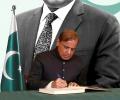
Shehbaz, 72, who was the consensus candidate of the Pakistan Muslim League-Nawaz (PML-N) and the Pakistan Peoples Party (PPP), received 201 votes, 32 more than what was required to become leader of the House in the 336-member Parliament.
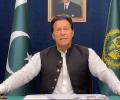
The prime minister needs 172 votes in the lower house of 342 to foil the Opposition's bid to topple him.

Sharif, 67, had to step down as the chief of the PML-N after he was disqualified as the prime minister by the Supreme Court on July 28 in the Panama Papers scandal.
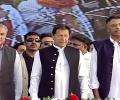
Pakistan's National Assembly resumed its crucial session on Monday after a two-day recess where Opposition is likely to formally table the no-trust motion against embattled Prime Minister Imran Khan amidst fluid political situation in the country.

"We hit India by entering inside. Our achievement in Pulwama is the achievement of the entire community under the leadership of Imran Khan. You all also have credit (for it), Chaudhry told the National Assembly on Thursday.

Shehbaz Sharif, the joint opposition's candidate for the post of prime minister, on Sunday vowed that the new government in Pakistan want to 'move forward' and not indulge in 'politics of revenge'.

Jailed former prime minister Nawaz Sharif's Pakistan Muslim League-Nawaz with 64 and former president Asif Ali Zardari's Pakistan Peoples Party with 43 seats are placed at number two and three respectively, the Election Commission of Pakistan said.
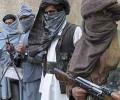
The National Assembly Standing Committee on Foreign Affairs on Monday issued a four-page policy paper linked to Kashmir.

After decades of delay and inaction, the Hindu minority community in Pakistan will soon have a marriage law as a parliamentary panel has unanimously approved the Hindu Marriage Bill.
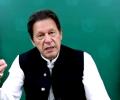
The Opposition PPP on Thursday alleged that the PTI-led government was planning an assault on the Sindh House in the federal capital.

Decision will be taken in second democratic transition of power in the nation's 70-year chequered history.
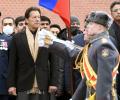
The National Assembly session for the move is expected to be convened on March 21 and the voting is likely to be held on March 28.

Polling started in Pakistan's National Assembly and four other provincial centres on Tuesday to elect a new president who will replace incumbent Asif Ali Zardari in September.

The nephew of Prime Minister Nawaz Sharif has been given overwhelming powers to run the administrative affairs of Pakistan's most populous province of Punjab.

Even as the bilateral relationship between the two neighbouring countries remains hostile, there is growing coordination between India and Pakistan on one multilateral forum - the World Trade Organization (WTO). Both countries have made two joint submissions at the WTO as co-sponsors in the past two months. In June, Pakistan joined India, Cuba, and 44 African countries, seeking sufficient flexibility in intellectual property rights for developing countries to fight the Covid-19 pandemic.

Prime Minister Khan, who had effectively lost his majority in the 342-member National Assembly, made a brief address to the nation after a stormy parliament session was adjourned by Deputy Speaker Qasim Suri.
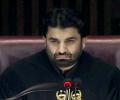
The apex court within hours took suo motu notice of it and a five-member bench started hearing the case on Monday.

Khan, in the same breath, praised the Army, saying "Pakistan needs the Armed forces more than Imran Khan."

Around 100 lawmakers from the Pakistan Muslim League-Nawaz and Pakistan Peoples' Party submitted the no-confidence motion before the National Assembly Secretariat on March 8, alleging that the Pakistan Tehreek-e-Insaaf government led by Khan was responsible for the economic crisis and the spiralling inflation in the country.
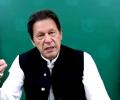
Talking to reporters in Islamabad, he said the Opposition has laid all of their cards, but the no-confidence motion against him would not be successful.

A larger bench of the apex court -- comprising Chief Justice Umar Ata Bandial, Justice Ijazul Ahsan, Justice Mazhar Alam Khan Miankhel, Justice Munib Akhtar and Justice Jamal Khan Mandokhail -- took up the matter after Deputy Speaker Qasim Suri rejected the move to dislodge the prime minister by declaring the no-trust motion unmaintainable due to its link with a so-called foreign conspiracy.

The Bilawal Bhutto-led Pakistan Peoples Party which won the third largest number of seats in the National Assembly in the elections appears to be split on whether to join a coalition government or sit on Opposition benches.

Two of his allied parties also withdrew their support and joined the ranks of the rejuvenated Opposition.

No prime minister in Pakistan's recent history has survived long in office after appointing an ISI chief who did not have the army chief's confidence. Imran may be no exception, observes Rana Banerji, who headed the Pakistan desk at the Research and Analysis Wing.

Indian officials claimed that the white helicopter crossed into the Indian airspace in Gulpur sector and hovered over there for sometime before turning back.

He said alleviation of poverty from interior Sindh will be among top priorities of his government.
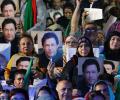
Khan's Pakistan Tehreek-e-Insaf (PTI) won 15 of 20 seats up for grabs in the politically crucial province of Punjab on Sunday, dealing a major blow to Prime Minister Shehbaz Sharif and his 13-party alliance led by the ruling PML-N.

Police said PML-N leaders and workers have been booked for taking the rally in violation of law.

As the country readies to go to polls on July 25, one can't deny the role of the military, but there are other factors too.
.jpg)
Pakistan on Friday said a meeting between Prime Minister Nawaz Sharif and his Indian counterpart on the margins of the United Nations General Assembly would be an "useful opportunity" to build trust and consolidate ties.
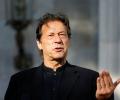
Khan's spokesman Dr Shehbaz Gill said that the prime minister has just a slight fever and cough.

The move came hours after Khan was removed from office through a no-confidence vote held early Sunday morning, becoming the first premier in the country's history to be sent home after losing the trust of the House.

The charged PTI supporters, including women and children, showed their solidarity with Khan during the rally that started at 9 pm on Sunday and lasted till 3 am on Monday.

If the parliamentary representation of radical Islamic parties goes up dramatically in 2018, what will this do to Pakistan's army?
 © 2026 Rediff.com - Advertise with us - Disclaimer - Privacy Policy - Sitemap - Feedback - About us - Terms of use - Grievances